
Are you looking for the best places to visit in Northern Norway? This is a guide to the most beautiful places to visit throughout Arctic Norway from cities to areas of natural beauty.
I love Northern Norway. It is unparalleled in its beauty and it feels like with every corner you turn, your mind will be blown.

From the Arctic Circle up the coast, the scenery is dominated by mountains rising out of the cold Atlantic Ocean.
In the northern reaches of the Norwegian Arctic, the landscape morphs into the tundra where reindeer roam throughout the summer.
This changing scenery and the picturesque villages dotted along the coast make for the perfect road trips in summer.

During the winter, Northern Norway is perfect for hunting the northern lights and cruising along the coast on the Hurtigruten.
Many of the places listed in this guide are also stops along the Hurtigruten cruise route in both summer and winter.
In this guide I have listed my favorite places to visit in Northern Norway. If you have any suggestions or questions, please leave a comment below!
Best places to visit in Northern Norway
1. Tromsø
Tromsø is where a lot of Arctic adventures start. There are lots of things to do in Tromsø in winter and the rest of the year! The city is home to the world’s northernmost university, planetarium, and botanical garden.
The Arctic-Alpine Botanical Garden features vibrant Arctic plant species that bloom in summer and autumn.
The same company also runs The Polar Museum, which tells the stories of expeditions and everyday life in the Arctic from the 17th century.
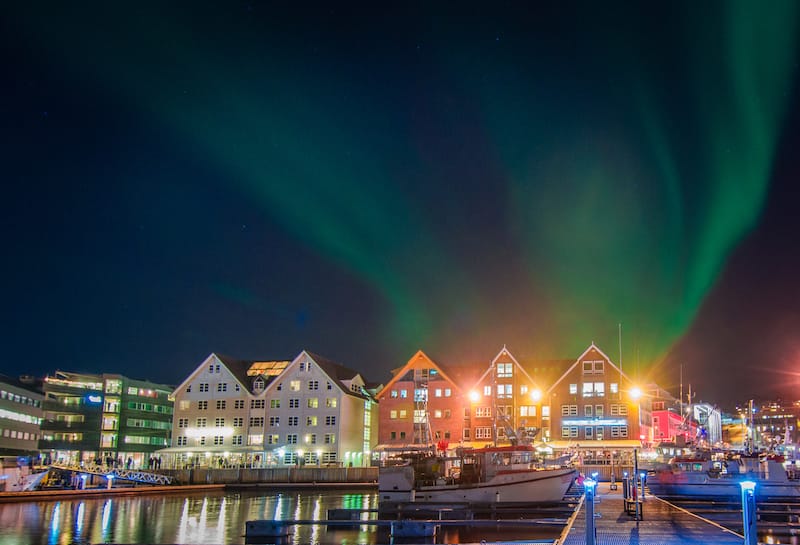
The city also has impressive architecture, with the Arctic Cathedral and Tromsø Cathedral being fine examples. If architecture and museums aren’t to your liking, take the cable car up the mountains instead.
The views are phenomenal and you might catch a glimpse of the northern lights! At night, grab a drink at Magic Ice – an entire bar made from ice!
2. Bodø
Found on the Bodø peninsula between Saltfjorden and Vestfjorden, Bodø is a vibrant town with a rich history, interesting culture, and impressive natural surroundings.
With Bodø as your base, you can fill your trip with unique attractions, fun activities, and great food.
One of the main attractions is the Saltstraumen. This small strait has one of the strongest currents in the world and is home to the world’s largest maelstrom (whirlpool). You can visit the maelstrom on a boat tour.

You will also find the Norwegian Aviation Museum (the largest in the Nordic countries) and the Nordland Museum (one of the oldest buildings in the town).
After a busy day, enjoy a local craft beer from the Bådin Bryggeri. I recommend trying the Tønder Bay New England IPA.
The brewery is open on select Fridays throughout the month for tours and tasting sessions. Alternatively, you can find their beers in numerous bars and shops around the city.
3 Narvik
Narvik is located along the Ofotfjord and is most famous for iron ore its iron industry, with regular cargo trains arriving from the mine in Kiruna, Sweden.
However, tourists love Narvik for its majestic nature and snow-capped mountains.
Unsurprisingly, one of the most popular things to do in the area is hike and ski. In fact, Narvikfjellet is one of the largest and most complete ski resorts in Northern Norway.

Here, you’ll find family-friendly slopes suitable for all skill levels and modern cabins offering scenic views.
Expert hikers will enjoy tackling the Øvre Fjellheisstasjon 13.9 km (8.64 mi) looped trail that offers panoramic views of the town and the fjord.
In town, be sure to learn more about Narvik’s history at the Narvik War Museum and Narvik Museum.
4. Ørnes
The colorful town of Ørnes is best known for its breathtaking archipelago, which consists of more than 700 islands and 30 towering peaks.
For epic views of the archipelago, check out Love Bench at the end of the pier.
In winter and summer, you’ll want to spend most of your time exploring the archipelago, but the town has plenty to offer too.
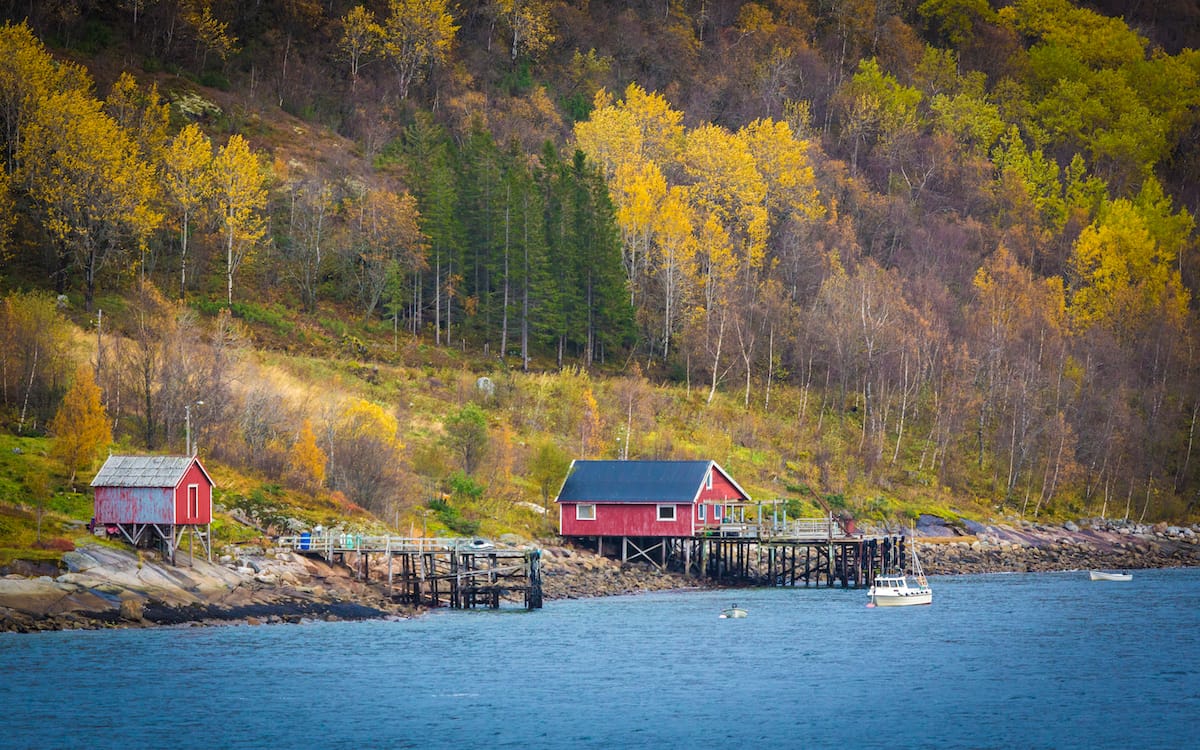
For example, the Ørnes Cultural Path will show you historic landmarks like Urnes Stave Church, which was built in 1130 AD.
Built in the 18th century, the Ørnes Old Trading Post and its vibrant architecture are also well worth a visit.
5. Stamsund
Stamsund is a small village located in the Lofoten archipelago on the southern side of Vestvågøy.
This village is a crucial fishing port and the largest base for Lofoten trawl fishing.
One unique activity you can try is cod fishing. Running throughout the year, most fishing trips head toward Nappstraumen where you’ll have the chance to catch halibut, cod, and plaice.
Cod fishing is incredibly easy and, in my experience, fish love to hook themselves on the line!
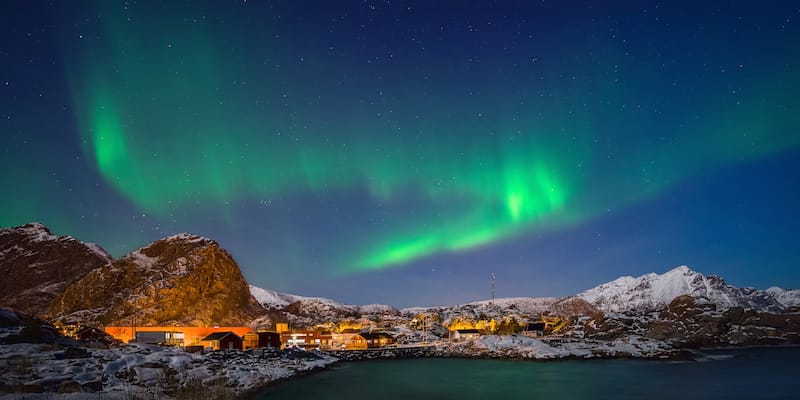
In summer, you could take to the water in a canoe or head out into the mountains.
The Steinetinden and Stamsundheia Loop will give you the chance to spot the common swift and cuckoo, and you’ll take in some of the best views in the archipelago.
For somewhere unique to stay, check out one of the traditional fishermen’s cabins, commonly known as a rorbu.
6. Stokmarknes
The idyllic village and port of Stockmarknes is where Richard With founded the iconic Hurtigruten coastal route more than 120 years ago.
Therefore, the Norwegian Coastal Express Museum is one of the biggest draws to the area.
Here, you can learn all about the region’s coastal activity and history. What makes the museum so unique is that it’s housed inside a full-sized ship – the MS Finnmarken from 1956.
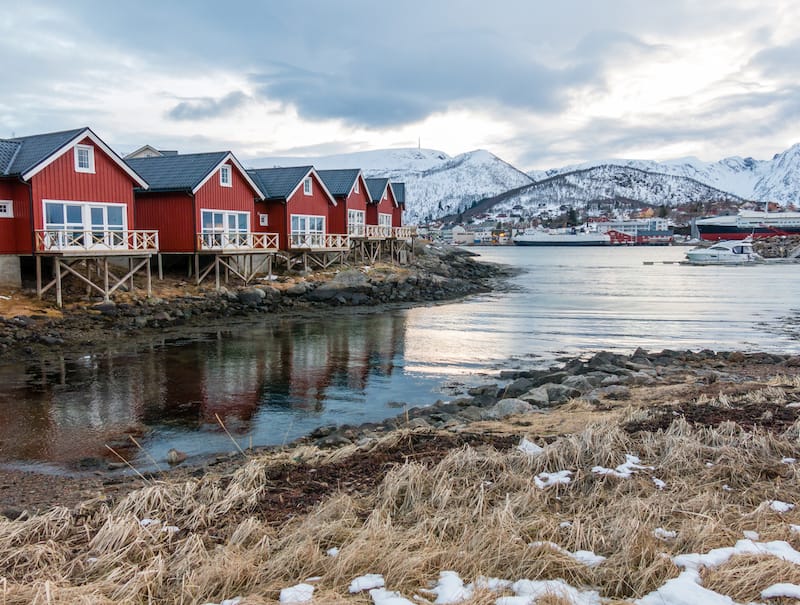
When you’re not exploring the museum, spend time exploring the village and some of its architecture. Børøy bru and Hadsel Church are two locations I recommend visiting.
From Stokmarknes, a lot of people also like to cross over the bridge to Børøya island, where you’ll find traditional stilt houses and sea views.
7. Sortland
You can find Sortland along the Sortlandsundet strait on the island of Langøya. The capital of the Vesterålen Archipelago, Sortland is famously known as the Blue Town after artist Bjørn Elevenes came up with the idea to paint the town blue in 1998.
As a result, you can stay in the quirky bright blue Strand Hotell if you’re looking for a unique experience.

In winter, a visit to Sortland Villmarkssenter is in order. At this family-run wildlife center, you can explore the Vesterålen with Alaskan huskies and race on snowmobiles.
In the summer, consider hiking along the coast and across Sortland Bridge to Sigerfjord Kirke. From the church, you’ll be treated to impressive mountain views and breathtaking architecture.
8. Risøyhamn
Found on the island of Andøya, Risøyhamn is a great place to visit if you enjoy bird watching.
That’s because there are bird colonies found in the area all year round. There are believed to be more than 160,000 nesting puffins nearby.
Risøyhamn is also a popular place to spot humpback whales and orcas, with voyages leaving the port regularly for spotting sperm whales.
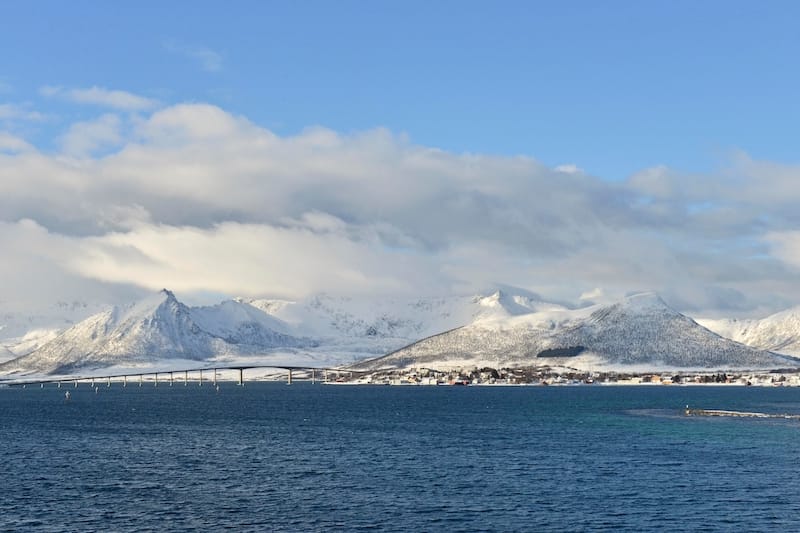
If you’re keen to find something different to do in Risøyhamn, make the 40-minute journey north to Andøya Space.
Here, you’ll find Norway’s only operational space center, where you can learn about northern lights research and take a virtual trip to Mars.
In the summer, enjoy a fine dining experience and scenic views at the Marmelkroken summer cafe.
9. Harstad
Harstad was once the northernmost Viking power center in Norway and an important trade connection for the Sámi people. The Sør-Troms Museum displays the history of Harstad from the Stone Age to the 1950’s.
If you’re traveling with children, they might enjoy a trip to Grottebadet. Here, they can play in the swimming pools and take part in water parties. This is a great wet weather plan.

Two kilometers (1.24 miles) from the center of the city is Folkeparken. This popular recreation area features marked hiking trails, lit skitracks, and traditional shelters.
In the summer, you can even lake swim and mountain bike in Folkeparken. Harstad isn’t too far away from WonderInn Arctic and their epic glass-mirrored cabins either!
10. Finnsnes
Finnsnes is known as the gateway to Senja Island. The town is home to several attractions, but the most popular is the central park and its natural lake. This is one of only two parks in Norway that contains a natural lake.
In the summer, the town hosts a week-long summer festival called “Finnsnes i Fest.” During the festival, you can expect lots of live music and delicious food and drink.
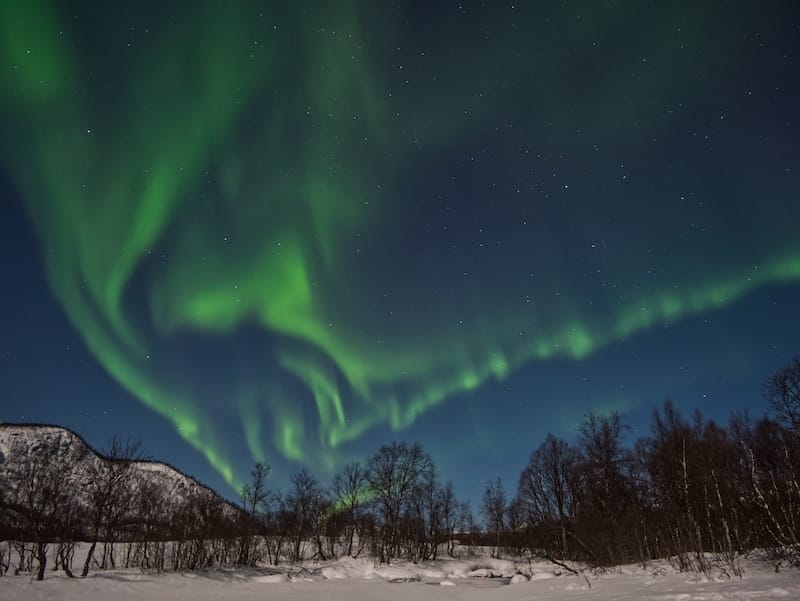
If you want to explore the ruggedness of Norway and potentially spot the northern lights, Senja Experience offers an exciting 5-hour night tour that explores the best possible viewpoints for the aurora borealis.
Be sure to tuck into authentic Senja recipes made from local ingredients at Senjastua too. I recommend the Boknafesk, a type of stockfish that is eaten throughout Northern Norway.
11. Skjervøy
Skjervøy is arguably one of the most picturesque islands in Norway. The island is surrounded by fjords and the sea, and the town features the most amazing snow-capped mountain backdrop.
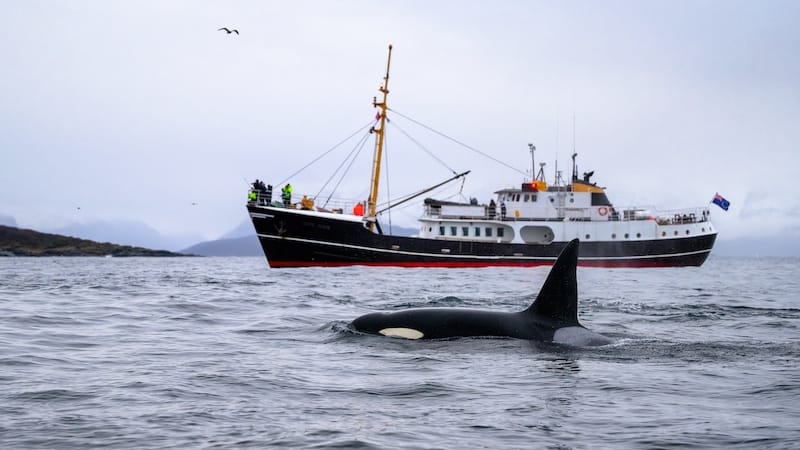
To top things off, incredible wildlife such as humpback whales and orcas can regularly be spotted in the region. As a result, a Skjervøy boat trip has to be on your itinerary.
You’ll potentially spot whales and you’ll be able to admire the geology of the island.
Another great way to enjoy nature on the island is by visiting one of the first hammock parks in Norway.
You can pitch your hammock 161 meters (528 feet) above the fishing village. Complete your wild adventure by staying in the remote Aurora Woods cabin!
12. Øksfjord
Øksfjord is connected to Skjervøy via daily ferries, so getting between the two places is quite straightforward. The biggest draw to this town is nature.
Øksfjordjøkelen Glacier is just a short distance away. The glacier spills over the edge of the coast and the blue ice calves into the sea. You can visit the glacier by kayak or RIB.
The main landmark in Øksfjord is the Øksfjord Church. It was built in 1954 and is an iconic site in the town.
During your visit to the town, be sure to stop by Støa Kafé Og Spiseri for some delicious Norwegian waffles, afternoon tea, and epic fjord views. Keep your eyes peeled for whales while you eat!
13. Hammerfest
Hammerfest is surrounded by stunning coastline, sandy beaches, and rugged mountains, making it a great destination for active travelers.
Since I was a child, I dreamed of visiting Hammerfest to see the northern lights after reading the book “Neither Here Nor There” by Bill Bryson, which still sits next to my desk.
For panoramic views of the town, hike up Salen Hill, just a 15-minute walk from the town center. Hammerfest is also quite historic.
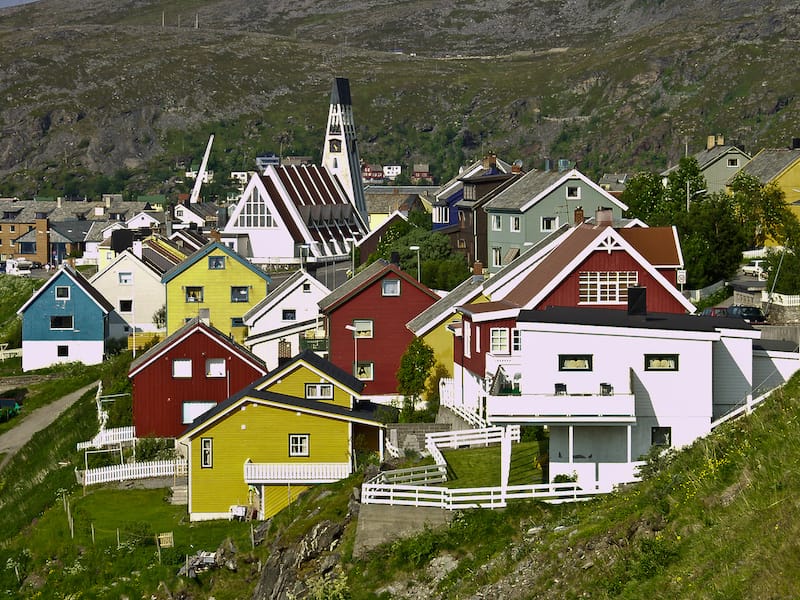
For example, The Struve Geodetic Arc – a UNESCO World Heritage Site, was once used to calculate the size of the Earth.
If you’re into history, make sure to visit the Museum of Reconstruction where you will learn about how Northern Norway was rebuilt after all the settlements were burned down in World War Two.
14. Honningsvåg
Honningsvåg is popular with the Hurtigruten Coastal Express and cruise ships. This city has a huge range of things to do all year round.
In winter, you can take to the hills on a North Cape winter safari or a guided snowshoeing hike. Both of these activities will allow you to explore Northern Norway’s diverse landscape.
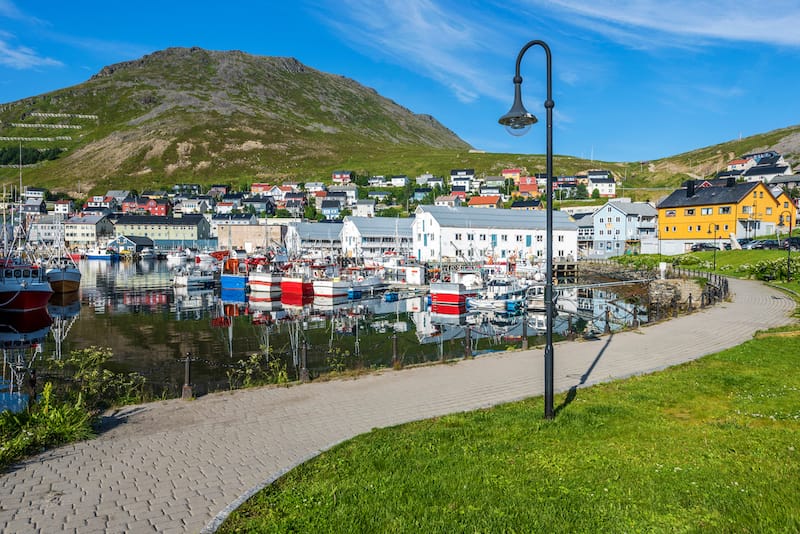
In summer, explore the city and everything it has to offer. You could go in search of king crab on a fishing expedition, visit the Bamse Statue, or explore the landscape on a Blue Puffin midnight sun tour.
One of my favorite attractions is Artico Christmas House, where you’ll find a festive gift shop, a traditional kitchen, and lots of fun and games.
15. Kjøllefjord
Kjøllefjord is a lively fishing community that lies at the head of a small fjord. It offers impressive ocean views and a glimpse of the Finnkirka sea cliff.
As well as the fjord, Kjøllefjord is surrounded by mountain plains, dense forest, and fishing lakes. Therefore, you’ll probably spend most of your time hiking.

The Kjøllefjord – Finnkirka 15.9 km (9.87 mi) hike takes approximately 6 hours to complete and offers excellent views of Finnkirka. If you want to take in local culture, Davvi Siida has some excellent winter and summer tours.
You’ll be able to visit migrating reindeer, learn more about Sámi culture, and even try some of the ancient Sámi cuisine.
For impressive sea views and traditional Norwegian food, like Hjellosing, consider staying at Hotel Nordkyn.
16. Mehamn
Mehamn is located on the Vedvik Peninsula and is a well-known fishing hub. Like most towns in Northern Norway, Mehamn is most popular with active travelers who want to explore.
However, the town is also famous for its Christmas Museum. The Nissehuset Christmas Museum is home to over 26,000 quirky Christmas-related items, a bar/pub, a spa and sauna, and vibrant waterfront accommodation. On top of that, the museum offers boat rentals for travelers who want to take to the water.

For an adventure, you can head out on a tour with Nordic Safari Wildlife Adventures. In winter, the 2-hour Snowmobile Safari will give you an opportunity to spot the northern lights if the skies are clear!
17. Berlevåg
Most people visit Berlevåg to escape the hustle and bustle. This quiet town is surrounded by a vast open landscape, so there’s plenty of exploring to be done.
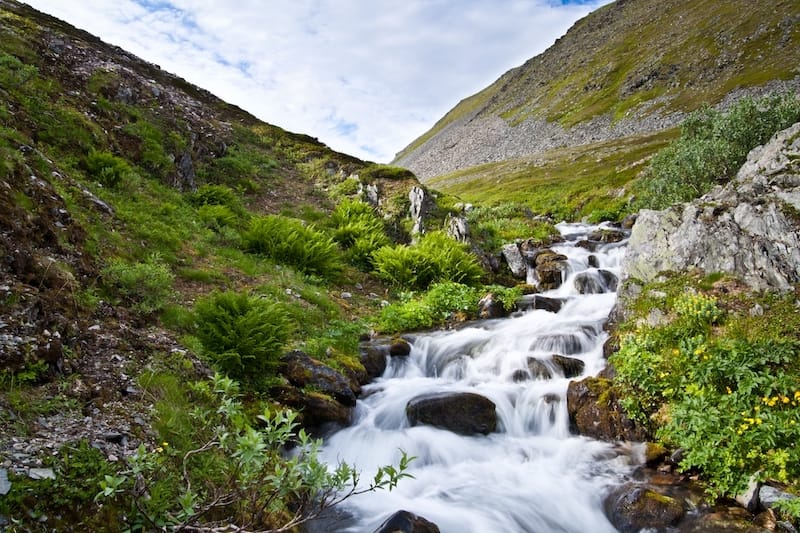
Sandfjorden preservation area is just a 13-minute drive away. Here, you’ll find endless hiking opportunities, mountain ridges, sandy beaches, and wildlife.
A walk along Sandfjorden beach will allow you to hike up the mountain ridge, swim in the icy sea, and spot wildlife like reindeer.
In Berlevåg, the main attraction is the Berlevåg Havnemuseum. This museum has exhibitions about the construction of the harbor, shipping, fishing, World War II, and archeological excavations.
Check out Arctic Glasstudio and its impressive glasswork during your visit too! For something to eat, tuck into a bowl of traditional Norwegian fish soup at Havblikk Kafe Og Pub.
18. Båtsfjord
Båtsfjord is found along the northern side of the Varanger Peninsula. As the fishing capital of Norway, Båtsfjord is a bird watcher’s paradise.
You can photograph birds like king eiders, steller’s eiders, and long-tailed ducks from close range.
Syltefjordstauran is also home to more than 300,000 kittiwakes, razorbills, and puffins. The 3 km (1.86 mi) long cliff is the perfect place for a refreshing walk.

After exploring the wild side of Båtsfjord, stop by the Båtsfjord Museum. The museum covers the development of Båtsfjord and puts a special focus on fishing and fisheries.
I recommend staying at Båtsfjord Brygge. This accommodation has hot tubs overlooking the sea and runs boat trips regularly to spot humpback whales.
19. Vardø
If you’re keen to find traditional Norway, include Vardø on your Northern Norway itinerary. Vardø is the easternmost town in Norway and is generally considered to be one of the oldest towns in the entire country.
Therefore, you can expect to find an abundance of traditional buildings, old landmarks, and vibrant architecture. Interestingly, the town also used to be a center for medieval witch trials.
Major points of interest include the Steilneset Memorial Site, the Drakkar Leviathan sculpture, and Vardøya Island.

If you want to learn more about the town, visit the Pomor Museum and Vardøhus Fortress. The architecture alone at Vardøhus Fortress is spectacular.
For a truly unique experience, spend the night in the Lighthouse Keepers Cottage on Hornøya, where during spring and summer you will wake up in the middle of thousands of puffins!
20. Vadsø
Vadsø is the largest town in East Finnmark, so there’s a lot more to do than other places in the region.
The town was a central area for the Finnish/Kven immigrants during the 19th century and a stopover site for the two North Pole expeditions, so there is some history to take in.
You can learn about the town at the Vadsø Museum. You should visit the Immigration Monument too!
If you time your visit right, you could experience the Varanger Music Festival. This festival takes place every year in Vadsø and features artists from across Norway.
If you’d prefer to experience the natural side of the town, walk around Vadsø Island. Here, you’ll find a range of coastal viewpoints and historical landmarks like Kokkenes Batteri.
21. Kirkenes
Kirkenes is a small town with an important history. It is best known for its views of the aurora borealis. In ideal conditions, the northern lights can potentially be spotted up to 200 nights a year.
The region’s history is displayed brilliantly in the Borderland Museum. There are a number of World War Two monuments and installations around the town, including an old bunker that can be toured daily.
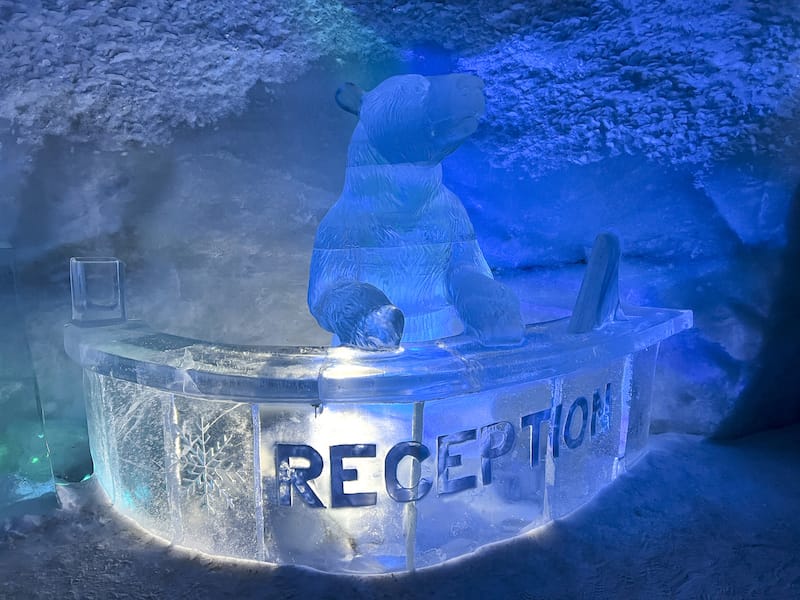
Moving away from local history, Kirkenes is home to the Snowhotel 365, which claims to be the first hotel completely made out of ice and snow in the world. Impressively, it is open for business 365 days a year.
The hotel offers a winter and summer schedule that includes fun for all the family. This includes a reindeer and husky farm, king crab fishing, and snowmobile tours.
22. Leknes
If you’ve always wanted to explore Norway’s stunning coastline, rugged mountains, and vibrant towns, Leknes is a great place to start.
Here, you’ll find tropical-looking beaches, traditional stilt houses, mountain hikes, and so much more. One of the best beaches to visit is Haukland Beach.
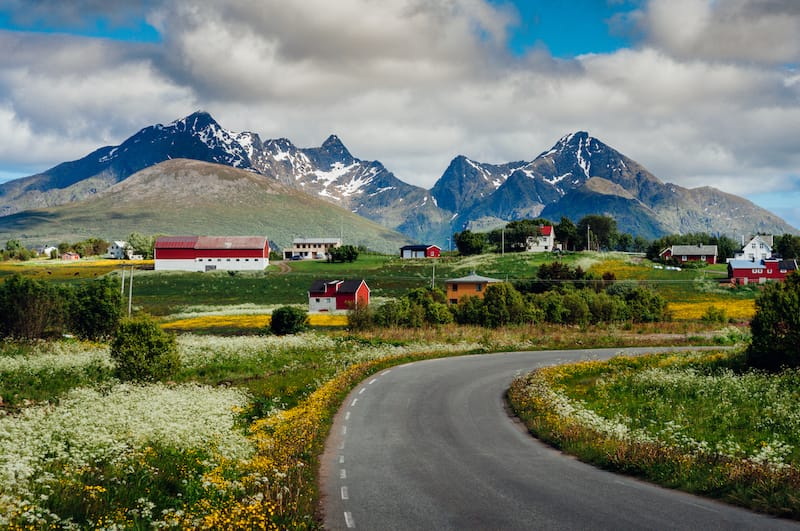
This white sand beach offers undisturbed views of the archipelago and turquoise waters. You should also visit Lofotruna, which is a large metal sculpture that hangs on a mountain wall.
Budding photographers might also enjoy the Lofoten photo safari tour offered by Arctic Guide Service. You can pick the photo spots and the tour company will sort the rest! Complete your stay by sleeping in a traditional cabin over the water at Lofoten Basecamp.
23. Reine
Located on the island of Moskenesøy, Reine is commonly referred to as Lofoten’s most scenic village, so it’s not somewhere you want to miss.
The village is scattered with red fishermen’s cottages and sits between tall mountains that rise up from sea level. Reine actually consists of several smaller islands, each connected by a bridge.
On Sakrisøya island, you can find Anitas seafood restaurant and shop, which is famous for its delicious fishburger.
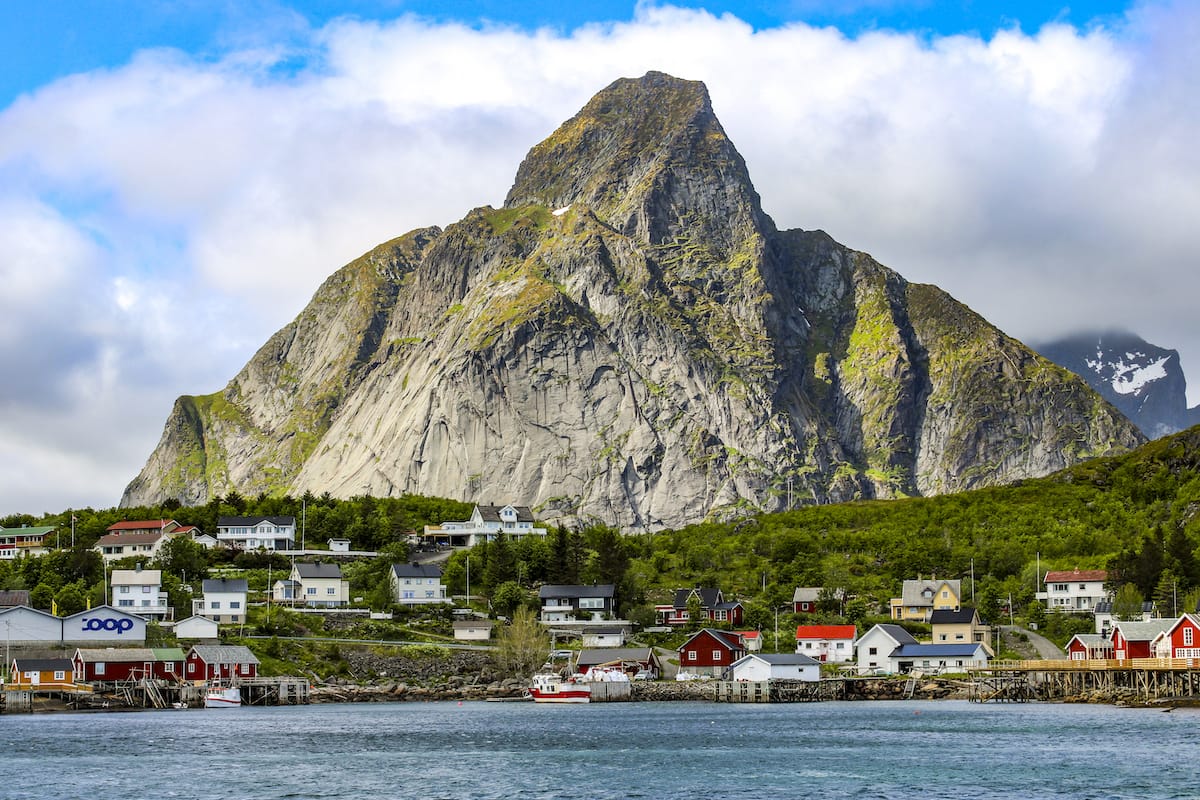
On Hamnøy Island, you will find Eliassen Rorbuer Accommodation – one of the iconic Lofoten Islands photo spots. Of course, you could stay here too!
In winter and summer, you can explore Reine by boat. Aqua Lofoten provides RIB tours that include mountain hikes and wildlife spotting opportunities. You might spot orcas and humpback whales!
24. Henningsvær
Henningsvær is a fishing village made up of several small islands off the coast of Austvågøya in the Lofoten archipelago. This village is most famous for its fjord views, traditional housing, and towering mountains.
However, Henningsvær is also home to an attraction unique to this region. Henningsvær Stadium can be found on a small island.
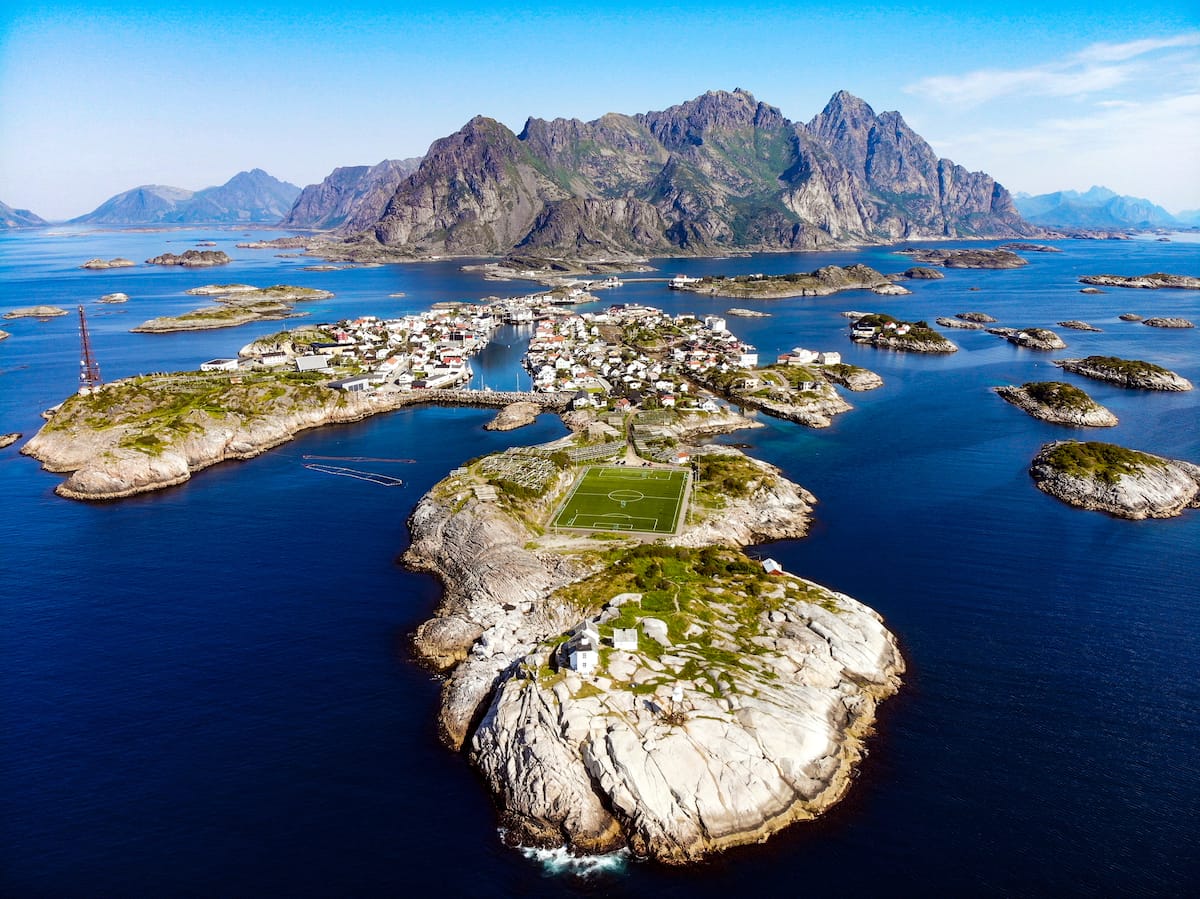
Arguably the most beautiful place in the world to play football, the stadium is visited by football fans from around the world all year. The walk to the ground itself is breathtaking. You’ll walk through the village center and have epic views of the mountains.
Henningsvær is also home to multiple art galleries (Gallery Lofoten and Kaviarfactory) and a climbing school that offers winter alpine climbing, skiing, and ice climbing excursions.
25. Svolvær
Svolvær has historically been one of the most important fishing towns in Northern Norway. If you walk along the coastal front of the town, you will find the huge racks used for drying cod, which is then exported worldwide.
While fishing is the main economic driver of the town, the tourism industry has been growing rapidly, with Svolvær the common starting point for many people’s Lofoten Islands adventure.
One of the best activities I did in Svolvær was take a sea eagle safari to Trollfjorden. As you reach the fjord the eagles start to circle the boat, knowing an easy meal of herring is on the cards.
These majestic birds then swoop down, picking fish out of the sea or catching fish as they are thrown off the boat. During summer, the mountains surrounding the area provide mindblowing scenery as a backdrop to hikes.
The area is known to be the inspiration behind the setting of the film Frozen, with the castle in the film apparently based on the church just outside of the city.
I recommend staying in the Svinøya Rorbuer on the island lying just off the town. The Rorbuer has a beautiful restaurant where, during the Christmas season, you can try a traditional Norwegian Christmas Dinner.
26. Senja
Senja is the second largest island in Norway and it has two completely different sides. The island’s side facing the Atlantic is wild and mountainous, while the inner side is covered with lush forest landscapes.
As such, Senja offers plenty of opportunities for outdoor enthusiasts. There are plenty of hiking, climbing, and driving opportunities.
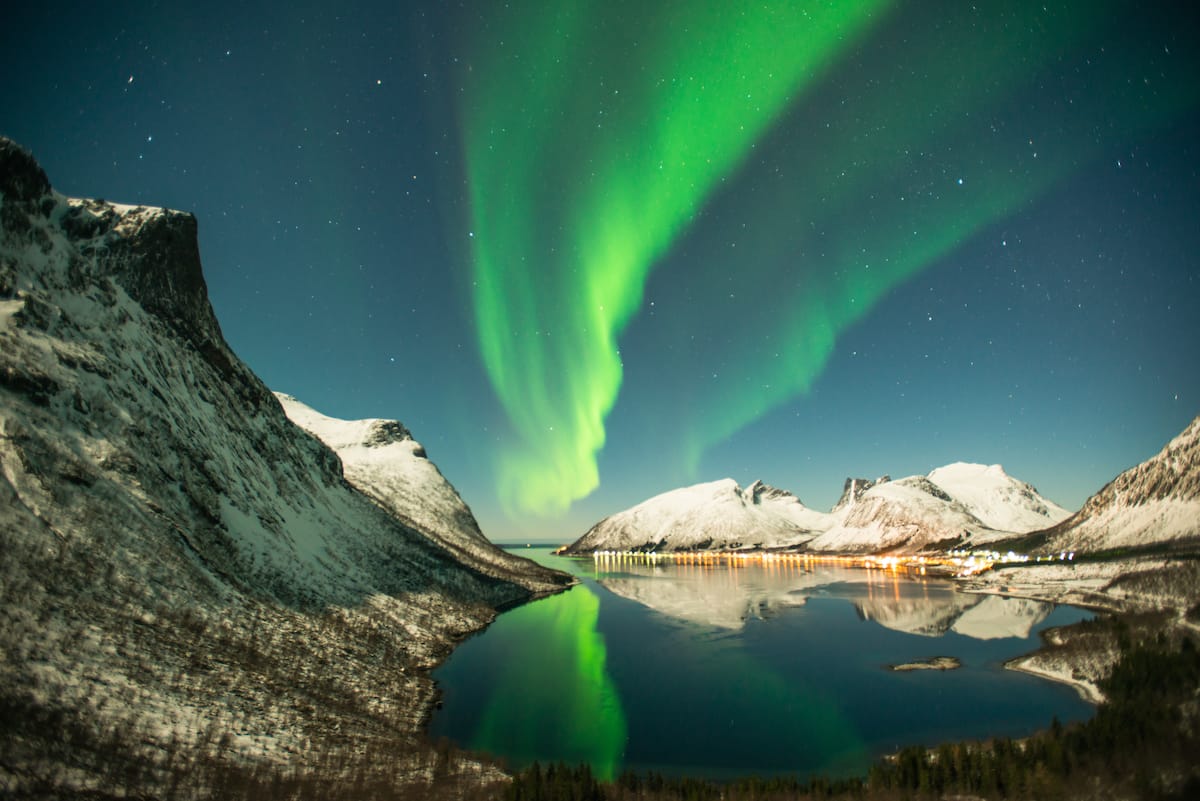
A scenic place to have a walk is Ersfjord Beach. This beach offers views of Okshornan and Tungeneset peaks, and you could take a cold dip in the sea. Ånderdalen National Park and its rugged mountain range are also worth exploring.
Along the Storjorda (Naustneset), you might be able to spot some of the local elk population. If you’re visiting Senja with children, you could walk alpacas at Snyfjellet Gård (animal park).
27. Alta
Thanks to its stable climate and minimal light pollution, Alta has become known as ‘the City of the Northern Lights.’ The lights can potentially be seen here up to 200 nights a year and the town is even home to the stunning Cathedral of The Northern Lights.
When you’re not looking for the northern lights, you can learn more about Alta in the Alta Museum.
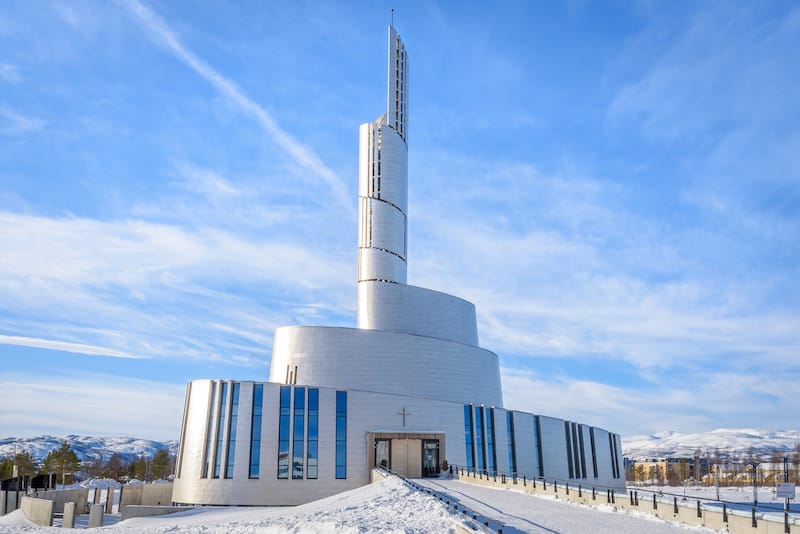
In the summer, the museum has a petroglyph park that displays fascinating rock etchings from the Stone Age.
In winter, adrenaline junkies might prefer to hit the snow on a snowmobile tour in search of the aurora borealis. At the end of the day, settle down for the night in the Igloo Hotel – a hotel fully constructed out of ice with a different theme every year.
28. Hamningberg
If you’re looking for something a bit more unique during your Northern Norway adventure, be sure to stop by Hamningberg.
Hamningberg is an abandoned fishing village that features intact buildings, making it one of the best-preserved examples of a fishing village from pre-war times.
Not too far from Vardø, most people visit the village in one day. This will give you enough time to enjoy the drive to the village and a few hours to explore.
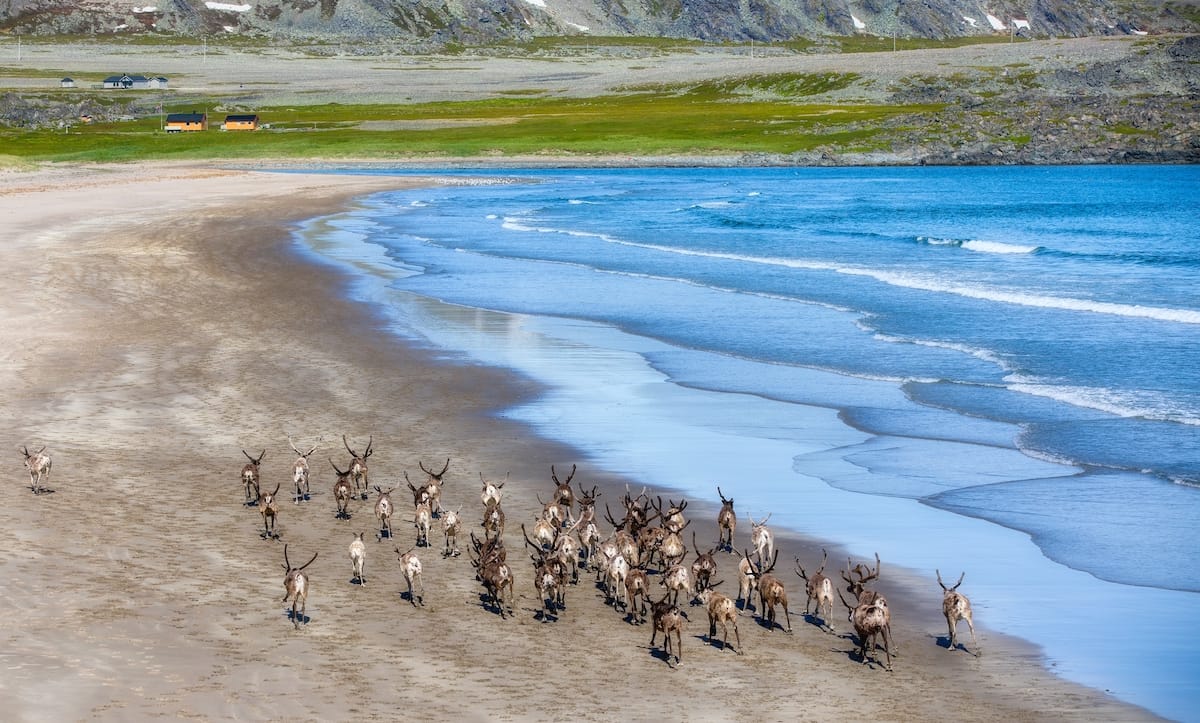
Along with the collection of abandoned buildings, there’s a small beach you can walk along that is occasionally frequented by reindeer! There is also an array of unique rock formations to photograph.
29. Stabbursdalen National Park
Stabbursdalen National Park offers everything any outdoor enthusiast could ever ask for from a Northern Norway national park.
Home to the northernmost pine forest in the world, Stabbursdalen features open plateaus, deep ravines, picturesque valleys, and the Stabburselva River.
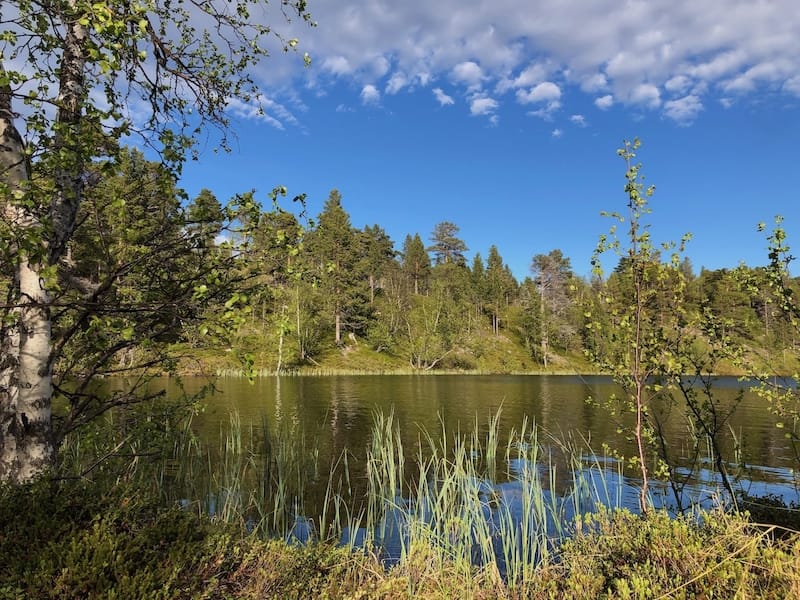
Tourists have access to a huge range of short and long hiking trails, salmon fishing spots, and mountain lakes.
The Stuorra Biŋalvárri trail is 8 km (4.9 mi) long and it leads through dense forest and mountain tops all the way up to the peak. The views of Stabbursdalen, Stabbursneset, and the Porsanger fjord from the top are phenomenal so don’t miss out!
30. Øvre Pasvik National Park
Øvre Pasvik National Park is located 100 km (62 mi) south of Kirkenes in northwest Norway.
Like Stabbursdalen National Park, Øvre has diverse landscapes scattered with forests, mountain peaks, waterfalls, and hiking trails.
This national park is also a fantastic location for hiking. In fact, it is probably best known for the Piilola Trail – a popular wilderness trail through the boreal coniferous forest zone.
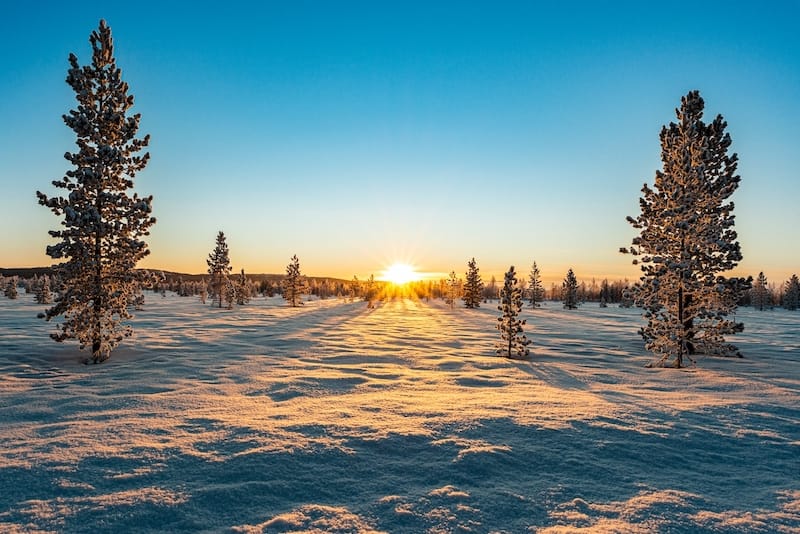
Best suited to experienced hikers, the 35 km (21.75 mi) long summer trail connects Norway’s Øvre Pasvik National Park and Finland’s Vätsäri Wilderness Area.There’s a chance you might spot wildlife like brown bears along the trail, so stay vigilant.
Another popular attraction in Øvre Pasvik National Park is the visitor center. Here, you can learn all about the wildlife in the area, and there’s even a restaurant and accommodation on site.
31. Bugøynes
One of my favorite places in Northern Norway is Bugøynes, also known as “Little Finland”. This small town in Troms og Finnmark was one of the only places which survived “Operation Nordlicht,” when the Nazis burnt down the majority of settlements from Northern Norway down through Finnish Lapland.
Bugøynes’s nickname Little Finland comes from the fact the town has traditionally been inhabited by Finnish speakers, and Finnish is still a commonly spoken language in the village.
There is even a Finnish sauna spot along the beach. After enjoying the warmth of the sauna, you can run into the frigid water of the Arctic Ocean!
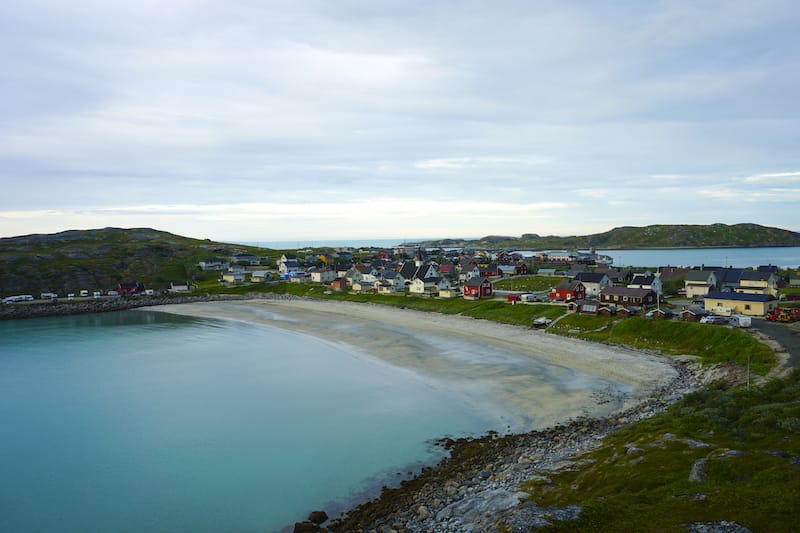
The road to the town is one of the most scenic routes in Northern Norway, with reindeer roaming free and beautiful views out over the fjord.
Many people visit Bugøynes with their campervans, staying the night in the campervan park in the village.
One of the most popular times to visit is during the Bugøynes festival, where people come from across the region to party in the summer.
Beautiful places to visit in Northern Norway (on a map!)
Have I missed any of your favorite places to visit in Northern Norway? Please leave a comment below with the place you love in Arctic Norway.